
Creating Inclusive Pathways for Every Child

Every child deserves the opportunity to learn, participate, and reach their potential. Yet formillions of children, education remains shaped by barriers that have little to do with theirabilities and everything to do with the systems around them.A child with a disability may be excluded because classrooms are inaccessible. A girl maystruggle to remain in school because of poverty or social expectations. A young person mayleave school without the skills necessary to navigate a rapidly changing economy.These challenges are not inevitable. They are choices societies make about who belongs and whois given opportunities to thrive.Inclusive education begins with a different belief: every child matters. Creating inclusive pathways means building systems that recognize the diverse experiences,strengths, and needs of learners. It means moving away from the idea that some children must fitinto existing systems and instead designing systems that are responsive to all children.At The People’s Project for Social and Climate Justice, we believe education is one of the mostpowerful tools for social transformation. But education can only fulfill that promise if it isequitable and inclusive.In our work, inclusion goes beyond physical access to schools. It includes ensuring that childrenfeel safe, valued, and supported. It means investing in teachers, strengthening familyengagement, and creating environments where young people can develop confidence, skills, anda sense of belonging.Young people today are growing up in a world that is changing rapidly. Technology istransforming work and communication. Climate change is reshaping communities andlivelihoods. Social and economic challenges continue to evolve.Preparing children for this future requires more than academic achievement alone.Children need opportunities to develop critical thinking, digital literacy, problem-solving skills,and the ability to collaborate with others. They also need supportive relationships andcommunities that believe in their potential.Inclusion benefits everyone.When schools become more responsive to diverse learners, all students benefit. When childrenlearn alongside peers with different experiences and backgrounds, they develop empathy,understanding, and stronger social skills. Inclusive education helps build communities that aremore equitable and cohesive.The work of inclusion also extends beyond schools. Communities, families, policymakers, andcivil society organizations all have important roles to play. Lasting change requires collectiveaction and shared responsibility.Nigeria’s young population represents one of its greatest strengths. But demographic potentialalone is not enough. The future will depend on whether young people have access to theopportunities and support they need to succeed.Creating inclusive pathways for every child is not simply an education issue. It is a social justiceissue. It is about fairness, dignity, and ensuring that no child is defined by the barriers theyencounter.When we invest in inclusive education, we do more than improve schools. We expandpossibilities. We create opportunities for children to participate fully in society and contributetheir talents to their communities.Every child deserves that chance.
Building Ethical AI Solutions for Public Accountability
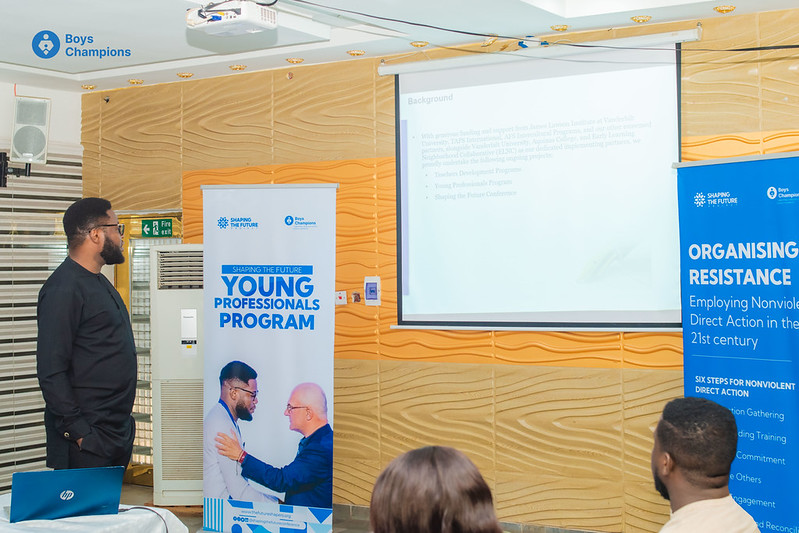
Artificial intelligence is changing how societies work. Around the world, governments andinstitutions are using data and technology to improve services, make decisions, and solvecomplex problems. But technology alone does not automatically create progress. The realquestion is whether these tools are designed to serve people.In many parts of the world, public trust in institutions is declining. Citizens want governmentsthat are transparent, responsive, and accountable. They want better information and greaterparticipation in decisions that affect their lives.Artificial intelligence presents an opportunity to strengthen these systems.When developed responsibly, AI can help citizens access information more easily, identify gapsin service delivery, monitor public spending, and support evidence-based decision-making. It canimprove how institutions listen to communities and respond to their needs.But there are also risks.Technology can reinforce existing inequalities if it excludes certain populations. Poorly designedsystems can amplify bias, increase misinformation, or create new barriers to participation.Communities that are already marginalized can become further excluded from decisions thatincreasingly rely on digital tools and data.This is why ethical AI matters.Ethical AI begins with people. It asks fundamental questions. Who benefits from thistechnology? Who is excluded? Who has a voice in shaping how these systems work?At The People’s Project for Social and Climate Justice, we believe that technology should expandopportunity rather than concentrate power. Artificial intelligence should strengthen democratic participation, improve public accountability, and help communities solve problems that matter tothem.Our work on AI for Good focuses on developing practical solutions that put communities at thecenter. We are interested in how technology can improve access to information, strengthen civicparticipation, and support more transparent systems of governance.Responsible AI also requires investment in education and public understanding. Citizens cannotmeaningfully participate in conversations about technology if they are excluded from learningabout it. Young people, civil society organizations, educators, and communities all needopportunities to understand both the possibilities and the risks that come with rapidly advancingtechnologies.Nigeria has a significant opportunity before it.The country has one of Africa’s youngest populations and a growing community of innovatorsand technology professionals. With the right investments and safeguards, Nigeria can help shapehow artificial intelligence is developed and applied across the continent.But the future of AI cannot be left solely to engineers or technology companies. It must alsoinvolve communities, educators, policymakers, and citizens.Technology works best when it serves people. Accountability works best when people canparticipate. Ethical AI is ultimately about bringing those two ideas together.The future of artificial intelligence in Africa should not simply be about adopting newtechnologies. It should be about building technologies that strengthen democracy, expandopportunity, and ensure that innovation serves the public good.