As cities continue to grow and temperatures rise, urban heat has become an increasingly urgent public health challenge. The effects are not distributed equally. Certain neighborhoods experience significantly higher temperatures due to factors such as limited tree cover, dense infrastructure, and socioeconomic disparities.
Today, communities are turning to data-driven solutions to better understand and address these inequalities.
What Is Urban Heat Vulnerability?
Urban heat vulnerability refers to the heightened risk faced by populations exposed to excessive temperatures. Factors contributing to vulnerability include:
- Lack of green spaces and tree canopy.
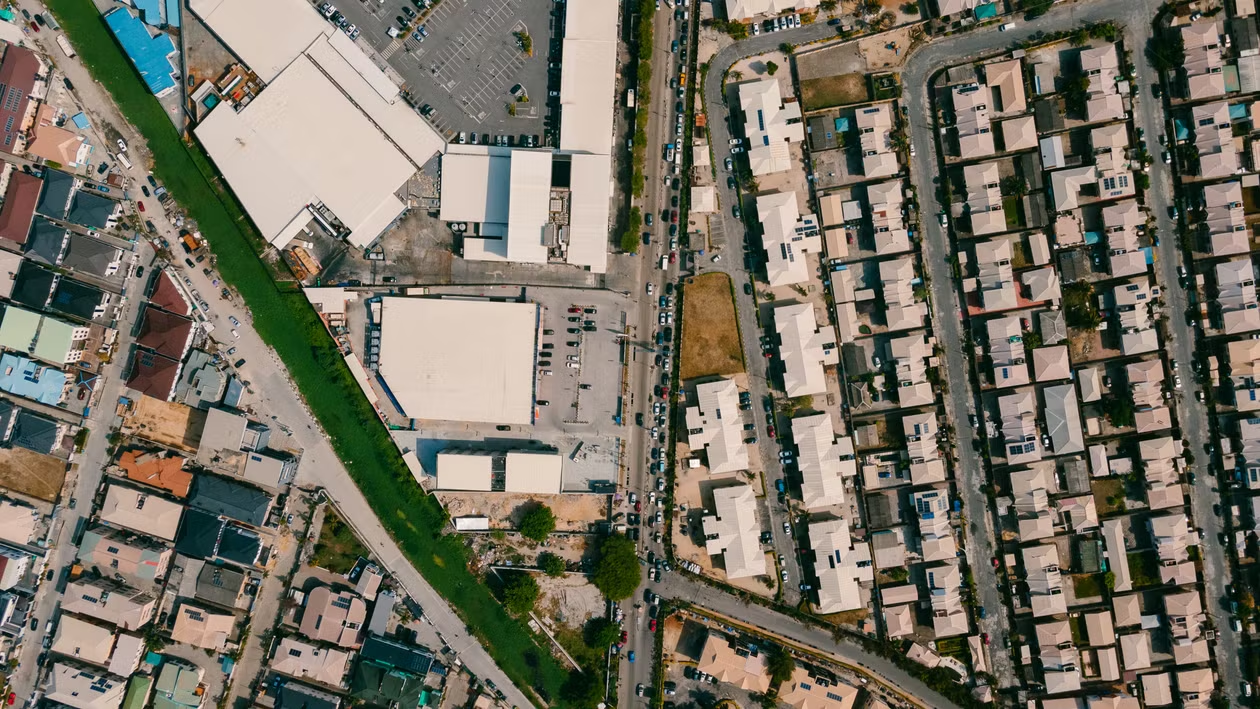
- High concentrations of asphalt and concrete surfaces.
- Limited access to cooling infrastructure.
- Socioeconomic and health disparities.
These conditions can increase heat-related illnesses and place additional burdens on already vulnerable communities.
Mapping the Heat
Advances in geospatial technology and climate data have enabled researchers and community organizations to identify localized temperature variations within cities.
Using satellite imagery, temperature sensors, and demographic data, heat maps reveal where residents are most at risk.
In many cities, neighboring communities can experience temperature differences of several degrees, often correlating with historical patterns of disinvestment and environmental inequality.
Turning Data into Action
Data visualization has become a powerful advocacy tool. Community groups are using heat maps to:
- Advocate for increased tree planting initiatives.
- Secure funding for cooling centers.
- Influence zoning and infrastructure policies.
- Promote equitable distribution of environmental resources.
These efforts help ensure that climate adaptation investments reach the neighborhoods that need them most.
Building Cooler, More Equitable Cities
Addressing urban heat requires collaboration among governments, planners, researchers, and local communities.
Strategies such as expanding urban forests, implementing cool roofing technologies, improving public transit access, and increasing green infrastructure can significantly reduce heat exposure.
By combining data with community engagement, cities can develop targeted solutions that improve public health and climate resilience.
Conclusion
Urban heat is more than an environmental issue—it is a matter of equity, health, and quality of life. Data-driven approaches provide communities with the evidence needed to advocate for meaningful change and build cooler, more resilient neighborhoods for future generations.